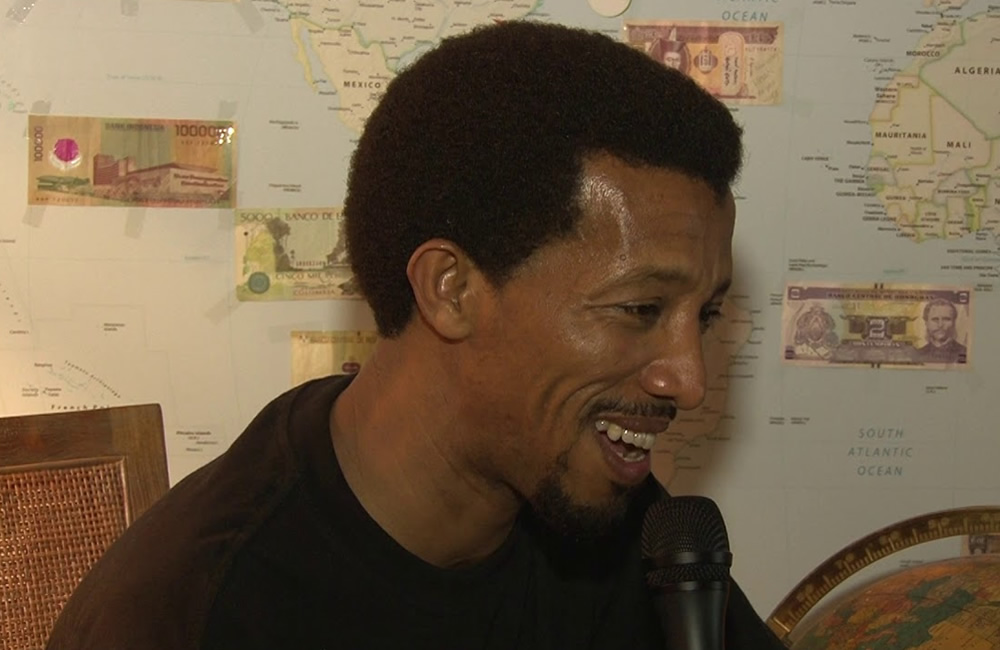
The reason why OLF went to Eritrea was because it has nowhere to go Ato Ababiya Abajobir had served as head of Oromo Liberation Front (OLF). During the transitional government (1991-95), he was assigned as Ethiopia’s ambassador to Egypt. He had been imprisoned for ten years when the military regime was in power (1974-91).
For the past four years he has been trying to bring peace between OLF and the government of Ethiopia. He spoke to Getachew Nigatu and Assegid Teffera about the peace efforts and other issues.
Excerpts:
What is it that the Oromo people demand? Our demand is to live in equality.
In the history of unified Ethiopia, our rights have never been respected since the time of Emperor Menelik or his successors. We demand equal rights. Some say that Oromo people have not been oppressed. Rather, the question of equal rights is pushed by Oromo intellectuals who want power, according to them.
What is your response?
I believe the question of equality is raised by all sectors of the Oromo people, be they intellectuals or peasants. We raise the issue because our parents had been telling us about the problem. The intellectuals dare to speak about it openly. But the question of equality is raised by everyone, not just the intellectuals. How much of the demand of Oromos has been addressed? Their demands were being addressed since 1974. The “land to the tiller” decree was a step in the right direction in addressing the problem. Since then, the law ensuring equality among nationalities is further addressing the issue. You can’t give solution to the problem at one stroke. But the demands are being met.
What kind of manifestations are there to say that the demands are being met?
I can’t tell you in detail since I’ve been out of the country for 17 years. But the fact that a federal system has been put in place, that all nationalities have their own territories or regions, that the regions have their own administrators, that regions can use their own languages as working language, that they can elect their own officials is a good beginning.
I haven’t traveled out of town much. But when I was in Jimma, I was able to see that the locals are in power. One of the locals is administering the bureau that I used to work for in the 1970s. I saw with my own eyes that that person responds to service seekers with their own language. In terms of meeting the demands of the Oromo people, what had OLF contributed to the cause? OLF had two objectives in its programme.
The first one is to establish an independent State of Oromia. Parallel to this objective is to live in freedom side by side with other nationalities. Although it is difficult to put the contribution of OLF quantitatively, the party’s main agenda has been to ensure equal rights for the Oromo people. It had a program of co-existence with other nationalities in a democratic state, short of secession.
OLF’s name has been in the past associated with acts of terrorism. Has the movement been carrying out those acts of terror out of the conviction that they are the means to achieve its goals? It is the government of America that has given definition to terrorism. But in America itself there is no consensus on the definition. The definition has elasticity.
Terrorism could be killing civilians, attacking children or residential areas or passengers. OLF had in the past said that it is not a terrorist organization. So far, it hasn’t been distinctly defined as terrorist organization. Now OLF is, in fact, trying to follow the peaceful path.
The government often blames OLF whenever there are bomb explosions. Is it just a defamation campaign against you by the government or was it your means of fighting? I can’t give you an answer for that. I was involved in diplomatic work. I was in no position to know or hear about such things. Since the past four years, I withdrew from official position because I was convinced that we should give peace a chance.
Whenever OLF is accused of carrying out acts of terrorism, it always denies it. It is up to the government to investigate the cases. What I can assure you is that there is willingness on OLF’s part to follow the peaceful path.
Some say that OLF is split, and unless all factions are involved in the peace negotiations, all efforts at reconciliation will be futile? The split is a recent phenomenon. Whether the split will further intensify or the factions will re-unify, it is difficult to determine at this stage. The reconciliation effort is led by Kes Itefa (Priest) and Ambassador Berhanu Dinka. They have taken the initiative. We will have to see if it is going to bear fruit.
There is also another initiative taken by Prof. Ephraim Yitshak. To which group do you belong? I started my own initiative. The reason why I left party leadership four years ago was that the peaceful way is better than armed struggle which has begun to appeal less and less to me as I was getting order. But once I took the initiative, I came to understand that I couldn’t do anything meaningful only by myself, which compelled me to begin working with other organizations or groups working for peace here and abroad.
One group is led by Prof. Ephraim Yitshak. I started working with them. Later on, I heard that the group led by Ambassador Birhanu Dinka had taken another initiative, and I started working with them, too. Now, I’m working with both groups.
We decided to work together when we came here. All sides consented to working jointly. So I belong to neither group. Rather I work together with both groups. Were you the victim of the split in OLF? I was siding with one of the factions led by Doud Ibsa when I was still a member of OLF. A little before that, the faction led by Gelassa Dilbo dissociated itself from the Front. I have tried to bring them to the fold but in vain.
After I left the Front, other factions headed by Beyene Lencho Bati and General Kemal Gelchu deepened the split. Now I’m not a member of any of the factions, including that of Doud Ibsa. I’m a neutral working as a peacemaker.
Doesn’t OLF’s and EPRDF’s agreement show that Oromo people’s demands have been met?
Negotiations and reconciliation are preliminary steps. Then we can explore the areas on which we can work together. We haven’t reached the stage you’re talking about. We are still negotiating. After the negotiations comes the reconciliation between the two parties. Consultations must be held with the federal government, the regional government and other foreign based parties. We will see if the demands are addressed or not after we start working together. There are those who say that if the Oromo question is addressed by the Oromo People Democratic Organization (OPDO), there is no need to talk to OLF since fulfilling the wishes of the people is more important than party politics. OPDO is trying to ensure that the rights of Oromos are respected.
In the provinces, I’ve seen attempts to implement the federal system. But that is not enough. We say that those who are abroad must come here, too. Bringing peace is not as simple as sewing a torn dress. It requires a lot of sacrifices.
Does OLF have an army? Yes, it does. Where is its army?
To be honest, I was not in the military wing. So I don’t know where its army is located. I was in Washington D.C while its headquarters was in Asmara. For the sake of preventing information leakage, military matters where kept secret, even from us.
How many fighters does OLF have in Eritrea, if it is not a matter of secrecy for you?
I don’t want to keep secrets from you. I only tell you what I know of. I can’t talk about the things that I don’t know. It’s been four years since I left the OLF.
How about when you were a member?
I only used to hear about it like anyone or read about it on the internet. There were speculations. Some say OLF’s army was in Ethiopia while others say it is in Eritrea. But I couldn’t be sure where it was. That was a secret that I don’t want to know because if there is information leakage, I could be blamed for it.
Doesn’t OLF have a military wing currently?
In earlier times, there used to be a military wing. Ato Tumsa was head of the political wing while Ato Jara used to head the military wing. But back then, I was in prison and I only was aware of the existence of the military wing. I couldn’t know how they operate because I was not member of the central committee. Some say that I was close to the founders. So they think I’m privy to top secrets. But I was not in the central committee. I was not at the center of things during the establishment of the Front. Then we were suddenly arrested. After ten years of imprisonment, I found OLF a much better organized Front. I limited myself to diplomatic work.
Have you been to Asmara? Yes. Does it have to do with OLF business? Yes. What brought OLF and the government of Eritrea together? OLF’s headquarters is in Asmara, Eritrea. They work closely with the government of Eritrea. I met with Eritrean officials to talk about peace. This is pertinent to not only OLF and EPRDF but also Ethiopia, Eritrea and Somalia. I asked them what they thought of the possibility of peace. They told me that they would prefer if the problem is settled peacefully.
If OLF and Ethiopia want peace, then what is the problem? Why is there a protracted peace process? Can you say that there is no interference or pressure from the Eritrean government? Eritrean officials want peace. There problem is the economy. Eritrea has poor economy. If its relationship with Ethiopia is improved it will help the country. Moreover, the two countries have religious and language similarities.
If peace comes, the border dispute will be solved. And prosperity can come. The Eritreans are well aware of this. The problem is how to implement it. The government of Eritrea has repeatedly said that it respects the territorial integrity of Ethiopia when it comes to the Oromo question. Party leaders such as Lencho and Dima had told me that Eritrean officials used to advise them that they should not promote the issue of secession like Eritrea. It was through the interference of Eritrea that the OLF was disarmed during the transitional period.
There is a consensus that OLF lost militarily and politically after Eritrean government convinced you to do that. And people say that the fact that you went to Eritrea to seek shelter shows that OLF does not have any viable strategy.
The fact that OLF agreed to put its army personnel in Hurso and other camps shows that its leaders want to settle differences peacefully. They said at the time that they were ready to bring peace. Back then, EPRDF had comparably larger army. After the Ethio-Eritrean war, OLF has no choice but to make its base in Eritrea. It has nowhere to go. Its leaders in Kenya were evicted. And those in Somalia were forced to leave after Hussein Aideed visited Addis Ababa. Sudan also closed its door on OLF. Outside help dried up. Then where can OLF go? After the Ethio-Eritrean war, the government of Eritrea granted the Front a space to operate in. The reason why OLF went to Eritrea was because it has nowhere to go. The Front was responsible for attending to refugees, youth fighters, and others.
Where could it settle them except Eritrea? The people of Eritrea embraced them due to their differences with EPRDF. It was the problem at the time that pushed OLF to go to Eritrea. What do you think of secession and OLF? The issue of secession is an academic question. First, the idea was conceived. By the time OLF was established, EPLF was fighting to secede from Ethiopia. In 1991, the idea of secession was put on hold and we opted for building a democratic order in the country.
Many OLF officials were appointed as ministers and ambassadors. It opened branch offices in many parts of the country. The party has two parallel objectives. One is to establish an independent State of Oromia. The other is to build a democratic order in the country together with adjacent peoples.
Do you believe that the Oromo people want secession? Or do they want equal rights? Which one outweighs the other?
Living as equals with others has more weight now. Was there a time when Oromo people favoured secession more than equal rights? Back in the old days, when OLF was first established, socialism was the fashion, and people believed that the right of nationalities to self-determination should be respected. But after seeing the disintegration of the Soviet Union, the idea was dropped.
Was it practical for OLF to pursue secession when the people intermingled, inter-married and live together with others? Or was it emotion that dictated you?
To be honest, I was not active when the idea of secession was being entertained. I was not part of the founders. I didn’t participate in writing the programme of OLF. Later, I read the programme and told them my reservations. I told them we were hasty. I said to them that before talking about secession, we should educate the people about their rights, democracy and their identify. If you tell people, who are forgetting their language, to secede, they will be confused.
Later, when the Derg (military) regime was in power, things really began to get nasty, and it influenced the party’s programme, i.e. on secession. Then, came the second idea, i.e. to live together an equals. That journey started in 1991. In terms of settlement, number and other factors, the Oromo nationality is considered as one of the pillars of the country. And OLF’s secession agenda is understood by many as illogical.
So does that mean that OLF is a loser which had wasted time and resources?
First, Oromo nationality is a pillar of the country. So, we have to ask ourselves not only how a pillar can secede but also who created or cemented the unity? During the time of Menilik II, people like Dejazmatch Balcha and Ras Gobena Dachew expanded the territory through military actions and created the unity.
The Oromo people like others paid sacrifices in the battles of Adwa and Maichew. In my birthplace, Gibe area, Aba Jifar consented to the idea of unity willingly and peacefully. Emperor Menilik even asked Aba Jifar to marry his daughter Zewditu (later Empress) and become heir to the throne. Aba Jifar asked Menilik whether the marriage between the two families is the solution.
Other peoples in the South like Kaffa and Wolaita were prone to unity. So that’s why I said that the idea of secession is an academic question. EPLF was our main backer and advisor. Because they were fighting to separate Eritrea from Ethiopia, there was the idea of imitating their path.
What did OLF contribute to ensure respect for equal rights to the Oromo people?
OLF operated in the country only for two years during the transition period. Back then it worked together with OPDO and EPRDF led government. What it contributed was to help educate Oromos to become more conscious of their identify and to work together with peoples of other nationalities. OLF also worked together with OPDO to make Oromiffa the working language of the Oromia region. After it quit the transitional government, it is difficult to say that it had made any contribution.
But there were people who were arrested and persecuted in the name of OLF?
That is controversial. Now that my position is as a peace negotiator, I can’t take any side. People accuse OLF leadership of wanting peace only because the leaders are getting older and have lost hope in armed struggle and are fed up of living in the bush. The process of stopping conflicts has to start somewhere.
There is a group which had taken a peace initiative. This group must pursue what it started. There are those who are in the opposition, of course. But those who accepted it, they did it wholeheartedly. I don’t think it is right to assume that OLF people could not bear the hardships of staying in the bush or fed up of living abroad, or want to secure their pension by coming here.
I believe they accepted the peaceful way from their honestly. OLF, EPRDF, CUD, UEDF and other party leaders come from the same era. Neither the ruling party nor the opposition is willing to inject fresh blood into leadership positions, and quarrel among themselves.
Haven’t you had enough of it? Democracy means election. Elections bring new personalities to the fore. I see that there are new people being appointed to higher offices. This is what we propose. This is one of the main reasons for the split in OLF. One faction demanded the removal of the old guard and for new leaders to take control because the former didn’t do anything meaningful. But the leaders denied that they had made mistakes. I vacated my position because I wanted new leaders to take over. Our time is coming to an end. The younger generation should replace us.