KIDEPO, UGANDA – My first visit to a national park was in 2004, when we visited Queen Elizabeth National Park in Western Uganda.
This is Uganda’s second largest park covering 1,978 square kilometres.
Before we embarked on this 345 kilometre journey, I had been promised to see many animals, among which were tree climbing lions.
But, unfortunately, after traversing this huge park, for three consecutive days, I left unhappily without seeing any lion at all.
The recent visit I had to Kidepo Valley National Park, located in the North Eastern horn of Uganda proved otherwise.
Kidepo is Uganda’s third largest national park covering 1,442 sqkm.
It’s found in the former notorious Karamoja region before the government disarmament programme that was done between 2010 and 2012.
It borders South Sudan and Kenya. Karamoja region is about the size of Rwanda or Burundi. The people found here are the Karamajongs and the minority IK community, who are said to be facing extinction.
The Karamoja region had a number of armed warriors who made tourism activities to this park very difficult and costly. Today, many are turning to agriculture.
This is a park, where only daredevils used to venture due to insecurity from the Karamajong warriors and Pokot cattle raiders from Kenya. There was also the threat posed by the Joseph Kony rebellion.
Today, the park can be visited both by road and by scheduled flights.mIt’s a park now very free and open to both domestic and foreign tourists. At only Ush5000 (about $2), a local Ugandan can traverse the park the whole day.
This is a park, not like Queen Elizabeth where I spent three days without seeing a lion; one can see lions within hours. “It has a concentration of over 102 lions,” Johnson Masereka the Conservation Area Manager for Kidepo Valley National Park said. “They usually feed during morning hours and at night. It is very easy to see them,” he adds. Kidepo is a wildness park, dry, hot and isolated, yet spectacular. It is magnificent and virgin, and waiting to be discovered.
The park is traversed by large sand rivers, its renowned for its distinctive composition of wild game co-existing with the dry mountain forests, open savanna, beautiful scenery and hilltops capped by rock kopjes.
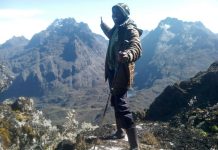
Masereka said when one visits Kidepo, he can enjoy the isolated wilderness dominated by the 2750 metre high Mt. Murungole and, transected by the Kidepo and Narus rivers.
The perennial rains make it an oasis in the semi desert, but its tract of rugged Savannah is home to 77 mammal species and over 500 bird species.
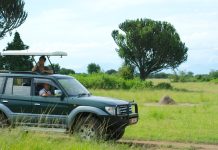
“Game viewing and drives is exciting all year round and so is bird watching, foot safaris, community walks, nature walks, sand along river Kidepo and mountain climbing/hiking,” Masereka said.
My visit to Kidepo was courtesy of the Uganda Wildlife Authority and the USAID Tourism for Biodiversity Programme who took a number of journalists to the park as it marked 50 years of existence.
Kidepo was gazzetted a national park in Uganda in 1958, as the country prepared for its independence on October 9th 1962.
“This visit is part of our 50 years of Kidepo celebrations,” Ms. Ingrid Nyakabwa said, the Uganda Wildlife Authority Marketing Manager.
According to Masereka, most of the people bordering the park are the Karamajongs who are traditional pastoralists.
“They have lived a nomadic life but recently adapting to agriculture. One can see their Manyatas (cow dung smeared homesteads), learn about their traditional dances and customs as well as supporting them by buying their locally made crafts like stools, knives, bows, arrows and jewelry.”
“The other people one can see are the IK community that migrated from Ethiopia in the early 1900s. This is one of the most reclusive tribes in Uganda still living in a very traditional manner in relative seclusion high atop of Murungole Mountain.”
Kidepo consists of two valleys, the Narus and Kidepo. The Nurus Valley means ‘muddy area’ among the locals and was also formally known as the water provision point. It is an area that used to be scrambled for by the native tribes, the Napore and the Mening of Sudan during the dry season.
Today, according to Phillip Akorongimoe, a ranger guide who has worked in the park for over 13 years serves as the heart for tourism due to the presence of water throughout the year thus attracting a lot of wild animals.
Akorongimoe adds Kidepo valley, where the park derives its name, is known for the borassus tree plantations stretching approximately 100 metres wide naturally planted by Elephant droppings through the years. Apparently, these acted as the source of nourishment during the food crisis in the seventeenth and eighteenth centuries.
Masereka said the area supports a wide diversity of mammal species like the cheetah. There are also localized carnivores like the bat eared fox, stripped hyenas, zebras and caracels.
“We have tree climbing lions, leopards, spotted hyenas and black backed and side stripped jackal,” Masereka said.
One can also see the Chandlers, Mountain reedbucks, elephants, Burchells Zebras, bush pigs, Rothchilds giraffes, bushbucks, buffaloes, and the rare ellands. But the largest concentration of wildlife in the Park are Buffaloes that amount to over 5000.
Kidepo hosts 475 species of birds, a number only second to Queen Elizabeth National Park’s 625 species.